GetAPro LLC
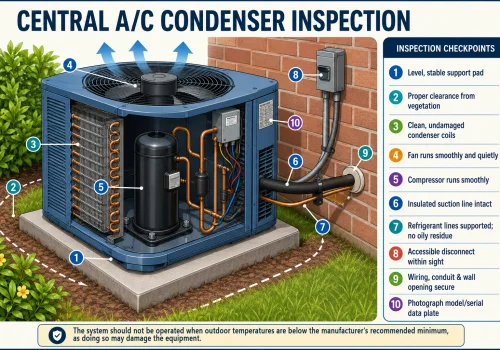
The outdoor condenser is the workhorse of a central air-conditioning system, sitting outside year-round and exposed to weather, debris, and wear that can go unnoticed until the system fails on the hottest day of summer. As Chicago home inspectors, we check condensers for proper installation, airflow, and safe operation on every inspection that includes central air. Here's what we're looking for and why it matters.
Placement, Support, and Airflow Clearance
The unit should be level and securely supported on a stable concrete or approved composite pad that is not cracked, displaced, or sinking. Adequate clearance should be maintained around the condenser, with vegetation, debris, fencing, and other obstructions kept away from the cabinet and coils to allow proper airflow.
Cabinet, Grilles, and Coils
The cabinet and protective grilles should be checked for damage, corrosion, and loose components. The condenser coils should be reasonably clean and free of excessive dirt, vegetation, impact damage, or bent fins.
Refrigerant Lines and Insulation
Refrigerant lines should be properly supported and protected, and the insulation surrounding the larger suction line should be intact and free from deterioration or missing sections. When operating, the larger refrigerant line will typically feel cool to the touch.
Fan and Compressor Operation
The condenser fan should start promptly and operate smoothly without excessive noise, wobbling, or vibration. The compressor should also start smoothly and continue operating without frequent cycling, unusual noises, or interruptions.
Electrical Disconnect and Wiring
An electrical disconnect should be installed within sight of the condenser, readily accessible, securely mounted, and unobstructed. Visible wiring and conduit should be checked for damage, deterioration, or improper installation.
Sealing and Signs of Refrigerant Leaks
The inspector should also verify that the line-set opening through the exterior wall is properly sealed and look for signs of refrigerant leakage, such as oily residue around fittings. A clear photograph of the manufacturer's data plate is taken to document the model number, serial number, electrical specifications, refrigerant type, and year of manufacture when listed or determinable from the serial number.
Operating Temperature Limits
The system should not be operated when outdoor temperatures are below the manufacturer's recommended minimum, as doing so may damage the equipment.